
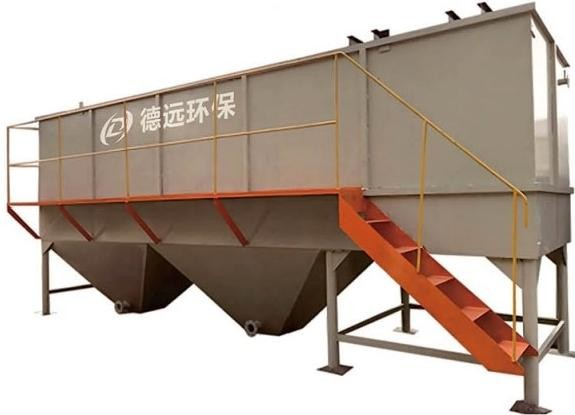
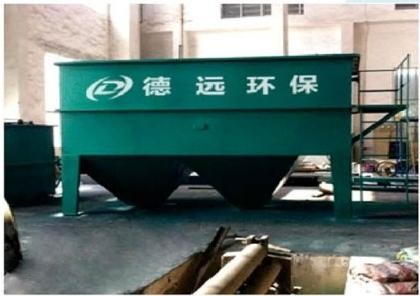
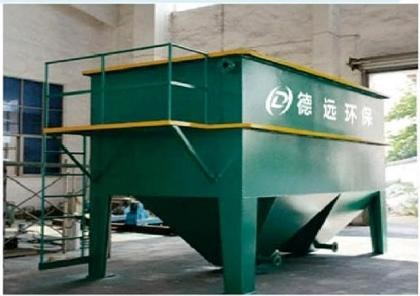
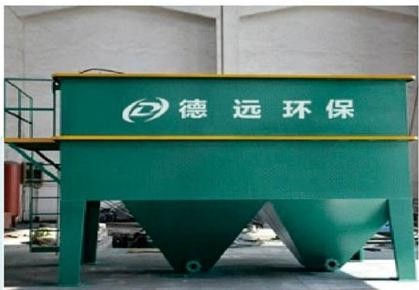
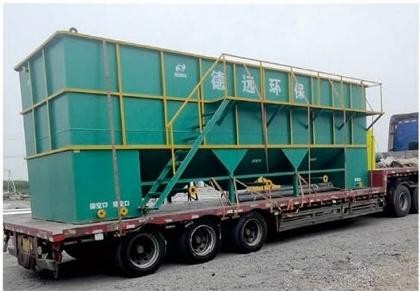
DY Series Coagulation Inclined Tube Sedimentation Tank
Development Background
The coagulation inclined tube sedimentation tank is a type of sedimentation tank used in wastewater treatment. The coagulation process is the most fundamental and critical treatment step in industrial and domestic sewage treatment. By adding certain chemicals (commonly referred to as coagulants and coagulant aids) to the water, particles that are difficult to settle are caused to aggregate and form colloids, which then combine with impurities in the water to form larger flocs. Flocs possess strong adsorption capabilities, enabling them to adsorb not only suspended solids but also some bacteria and dissolved substances. Through adsorption, the flocs increase in volume and settle. The coagulation-sedimentation process has been used in water treatment for hundreds of years. Compared to other physicochemical methods, it offers advantages such as high-quality effluent, stable and reliable operation, cost-effectiveness, and ease of operation.
Equipment Principle
This water treatment method involves using coagulants to cause colloids and fine suspended solids in wastewater to coagulate into flocs, which are then separated and removed. The coagulation-sedimentation method is widely used in water treatment. It not only reduces sensory indicators of water quality, such as turbidity and color, but also removes various toxic and harmful pollutants.
Classification of Coagulation-Sedimentation Tanks
☑ 1.Horizontal flow sedimentation tanks consist of a water inlet device, water outlet device, sedimentation zone, buffer zone, sludge zone and sludge discharge device. Horizontal flow sedimentation tanks are typically constructed of concrete; they can also adopt brick and stone masonry structures or earth tanks lined with bricks and stones. Horizontal flow sedimentation tanks feature a simple design, excellent sedimentation performance, and stable operation, making them widely used; however, they require a large footprint.
☑ 2.Vertical flow sedimentation tanks, also known as vertical sedimentation tanks. The tank’s plan view is circular or square. Wastewater enters the tank from top to bottom through an inlet pipe located at the center of the sedimentation tank. An umbrella-shaped baffle is installed below the inlet outlet to ensure uniform distribution of the wastewater within the tank, after which it slowly rises along the entire cross-section of the tank. Under the force of gravity, suspended solids settle into the conical sludge hopper at the bottom of the tank, while clarified water is discharged through the overflow weir around the upper edge of the tank.
☑ 3.Radial flow tanks typically have a circular plan view, though square ones also exist. They feature a large diameter and shallow depth, with diameters ranging from 20 to 100 meters. The water depth at the center does not exceed 4 meters, while the depth at the periphery is no less than
1.5 meters. Wastewater enters the tank through an inlet pipe at the center and flows slowly radially toward the periphery. Suspended solids settle during this flow and enter the sludge hopper along the slope of the tank bottom, while clarified water overflows from the tank perimeter into the outlet channel.
☑ 4.New-type inclined plate or inclined tube sedimentation tanks. These primarily involve installing inclined plates or tubes within the tank, which can significantly improve sedimentation efficiency, shorten sedimentation time, and reduce the volume of the sedimentation tank. However, inclined plates and tubes are prone to scaling, biofilm formation, and scum production, requiring extensive maintenance and resulting in a short service life for the pipes and plates.
☑ 5.Horizontal pipe sedimentation tanks are currently the type of sedimentation tank that most closely aligns with the “Hazen” shallow-layer theory. They feature horizontally placed pipes through which water flows horizontally, while suspended solids are separated vertically, combining sedimentation and separation functions. During installation, prefabricated “horizontal tube” modules can be assembled to form a horizontal tube sedimentation tank.
Commonly Used Coagulants
☑ Polyaluminum Chloride
Polyaluminum chloride is an inorganic polymeric coagulant. It is a water treatment chemical with a high molecular weight and high charge, produced through the bridging action of hydroxide ions and the polymerization of polyvalent anions. It is an inorganic polymeric coagulant. It primarily works through mechanisms such as double-layer compression, adsorption-induced neutralization, adsorption bridging, and floc capture, causing fine suspended particles and colloidal ions in water to become destabilized, aggregate, flocculate, coagulate, and settle, thereby achieving purification.
☑ Functions of Polyaluminum Chloride
The flocculation properties of polyaluminum chloride are as follows:
- Strongelectrostatic neutralization of colloidal substances in
- Excellentbridging and adsorption of suspended solids in water by hydrolysis
- Selective adsorptionof dissolved
☑ Polyacrylamide
Chinese Name: Polyacrylamide English Name: Poly(acrylamide)
Abbreviation: PAM (Polyacrylamide) is a water-soluble polymer that is insoluble in most organic solvents. It possesses excellent flocculation properties and can reduce friction resistance between liquids. Based on ionic characteristics, it can be classified into four types: non-ionic, anionic, cationic, and amphoteric.
Application Areas
Applications: In the mining and coal washing industries, using PAM as a flocculant promotes the settling of solids in mining and coal washing wastewater, clarifying the water while recovering useful solid particles and preventing environmental pollution. In the sugar industry, PAM accelerates the settling of fine particles in sugarcane juice, facilitating filtration and improving the clarity of the filtrate. In the aquaculture industry, PAM improves water quality and increases water transparency, thereby enhancing photosynthesis. In the pharmaceutical industry, PAM serves as a flocculant for separating antibiotics, a binder for tablet formulation, and a clarifying agent for process water. In the building materials industry, PAM functions as a thickening and dispersing agent for coatings, a cooling agent for sawing stone slabs, and a ceramic binder. In agriculture, PAM, as a highly absorbent material, is used as a soil moisture retainer and a seed culture agent. In the construction industry, PAM can enhance the hardness of gypsum cement and accelerate the dehydration rate of asbestos cement. Additionally, PAM can be used as a protective coating for natural or synthetic leather and as a granulation aid for inorganic fertilizers.
We highly value your feedback and inquiries. If you have any questions about our products or services, please fill out the form below and we will contact you shortly.