
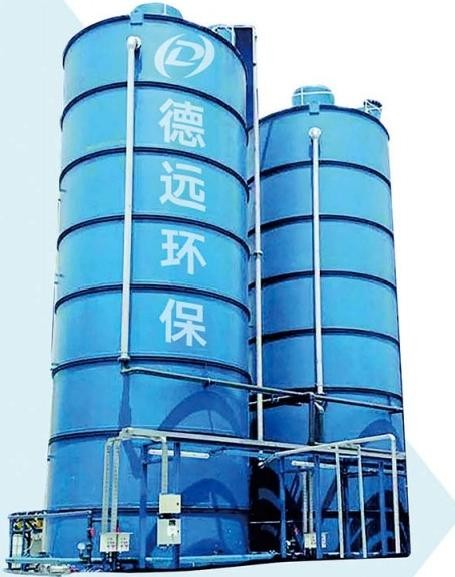
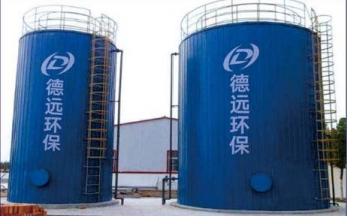
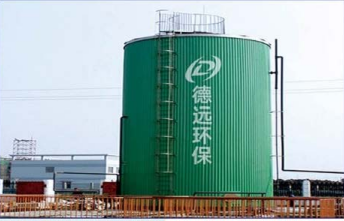
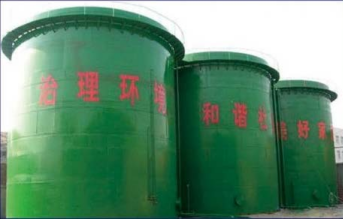
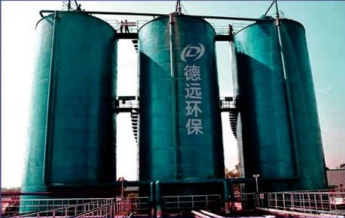
DY Series Anaerobic Reactor
The anaerobic reactor is a highly efficient multi-stage internal circulation reactor and a typical representative of third-generation anaerobic reactors. Compared to second-generation anaerobic reactors, it offers advantages such as uniform water distribution, high volumetric load (up to 15–30kg COD/m³·d), stable operation, strong resistance to shock loads, low capital investment, and a small footprint. It has been successfully applied in the treatment of highly challenging sewage in industries such as beer production, papermaking, food processing, aquaculture, slaughterhouses, and industrial manufacturing. Since the 1990s, with the widespread adoption of the UASB reactor—characterized by granular sludge—the Expanded Granular Sludge Bed (EGSB) reactor and the Anaerobic Internal Circulation (IC) reactor have been developed based on this technology, both of which also rely on granular sludge as their fundamental principle. Among these, the EGSB reactor utilizes an externally supplied effluent recirculation to create a high upward flow velocity within the reactor, enhancing contact and reaction between the substrate and microorganisms. It can treat low-concentration organic wastewater, such as municipal wastewater, at lower temperatures; whereas the IC reactor is primarily used for treating high-concentration organic wastewater. By relying on the large amount of biogas generated by the anaerobic biological process itself to create sufficient internal circulation and mixing of the slurry, it can achieve higher organic loading rates. These reactors are collectively referred to as “third-generation anaerobic bioreactors.”
Product Features
☑ High volumetric loading: Anaerobic reactors feature high sludge concentrations and large microbial populations. Combined with internal circulation, they achieve excellent mass transfer efficiency, allowing the influent organic loading to exceed that of conventional anaerobic reactors by more than three times.
☑ Reduced capital investment and footprint: The IC reactor has a volumetric loading rate approximately three times higher than that of a conventional UASB reactor, and its volume is about one-fourth to one-third that of a conventional reactor, significantly reducing capital investment in reactor construction; furthermore, the IC reactor has a very high aspect ratio (typically 4–8), resulting in a smaller footprint.
☑ Strong resistance to shock loads: When treating low-concentration wastewater (COD = 2,000–3,000 mg/L), the internal circulation flow rate can reach 2–3 times the influent flow rate; when treating high-concentration wastewater (COD = 10,000–15,000 mg/L), the internal circulation flow rate can reach 10–20 times the influent flow rate. The extensive mixing of recirculated water with the influent thoroughly dilutes harmful substances in the raw water, significantly reducing the impact of toxins on the anaerobic digestion process.
☑ Strong resistance to low temperatures: The primary effect of temperature on anaerobic digestion is its impact on digestion rates. Because IC reactors contain a large number of microorganisms, the impact of temperature on anaerobic digestion becomes less significant and severe. Typically, anaerobic digestion in IC reactors can proceed at ambient temperatures (20–25°C), thereby reducing the difficulty of maintaining digestion temperatures and saving energy.
☑ pH buffering capacity: The internal circulation flow, equivalent to the return flow of effluent from the first anaerobic zone, utilizes the alkalinity generated by COD conversion to buffer the pH. This maintains optimal pH conditions within the reactor while also reducing the amount of alkali required in the influent.
☑ Internal automatic circulation without external power: In conventional anaerobic reactors, recirculation is achieved through external pressurization, whereas the IC reactor uses biogas generated internally as the driving force for the circulation of the mixed liquor, eliminating the need for pumps to force circulation and thereby reducing energy consumption.
☑ Stable effluent quality: The use of a two-stage UASB series-connected, tiered anaerobic treatment system compensates for the adverse effects caused by high Ks values during the anaerobic process. VanLier demonstrated in 1994 that reactor
tiering reduces VFA concentration in the effluent, extends the hydraulic retention time, and stabilizes the reaction.
☑ Short start-up period: The high sludge activity and rapid biological proliferation within the anaerobic reactor provide favorable conditions for rapid reactor start-up.
☑ High biogas utilization value: The biogas produced by the reactor has high purity, with CH₄ at 70%–80%, CO₂ at 20%–30%, and other organic compounds at 1%–5%, making it suitable for use as fuel.

We highly value your feedback and inquiries. If you have any questions about our products or services, please fill out the form below and we will contact you shortly.
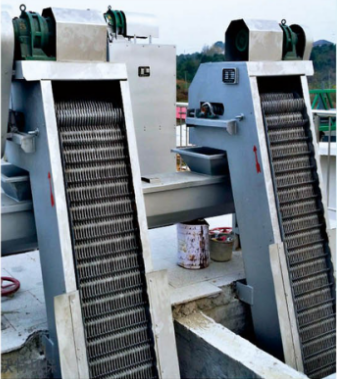
DY Series Mechanical Bar Screen